Concrete retaining walls in San Bernardino CA - built to drain and hold your slope
Dirt sliding, an old wall leaning or a slope you can't use? We build concrete walls that hold the ground and keep water moving.
- Licensed and insured.
- Free quotes on site.
- Expect a reply within 1 business day.
What does it take to build a retaining wall that lasts?
A concrete retaining wall is a wall built on a footing to hold back soil, and in San Bernardino we build them to turn a slope into level ground you can use while keeping dirt and water where they belong.
Most people call us because something's moving. Dirt is creeping onto the patio, an old wall is starting to lean, or half the backyard is a hill nobody walks on. The price moves with how tall and how long the wall is, how easily we can get equipment to the spot, and how much water we have to deal with behind it, and the schedule mostly turns on whether your wall needs a permit or engineered plans. I measure all of that on site and put what's included and what isn't in writing, so you know what you're comparing.
How we build a concrete retaining wall
Walls fail from water more than anything, so I plan the drainage behind the wall before I plan the wall itself. I want to know where your water comes from, whether that's roof runoff, the yard above or a sprinkler line, and where it can go once it's behind the wall. Then we dig out for the footing, the wide base the wall stands on, set rebar, the steel bars that help the concrete hold up against the soil leaning on it, and form and pour the wall. Behind it we put in a drain that can be cleaned out instead of weep holes, because those little holes tend to plug up over the years and the water comes right back. After that we fill the soil back in against the wall and clean up.
A wall often comes with other work. If you're leveling part of the yard for a pool, we can pour concrete pool decks on the flat ground the wall creates, and if you're putting a shop or a room on that new level, we handle concrete floor installation too.
Low walls for beds and small grade changes
These suit a yard that needs a foot or two of difference to make a flat lawn or a raised planter bed. They're simpler to build, but they still get a drain, because a short wall holding wet dirt will crack and lean too.
Walls cut into a slope
These are for backyards that climb, where you want usable flat ground. They take the most digging and planning, so this is where I spend the most time on where the water goes and how we get equipment in.
Replacing a leaning or cracked wall
This is for an old wall that's tipping, bulging or weeping water through the face. We figure out why it moved before we pour a new one, since the same wall built the same way just gets you the same problem.
Concrete retaining walls and San Bernardino permit rules
In the City of San Bernardino, a retaining wall is exempt from a building permit only if it's not over 4 feet, measured from the bottom of the footing to the top of the wall, and isn't supporting a surcharge or holding back certain liquids. That footing counts, so a wall that shows 3 feet above the dirt can be over the line once you add what's buried. Surcharge is the city's word, and whether something above your wall counts is the city's call, so we check with the city's building and safety office for your address before anything gets dug. On more complex projects, the city reviews plans and specifications before it issues a permit, and in some cases it wants them drawn by a California registered architect or engineer. When your wall needs a permit, we take care of it and set up the inspections. If your lot is outside city limits, your own city or the county runs its own building office, and we check with that one instead.
We're based in San Bernardino and work across the cities around it. What we see most are backyards that rise or drop away from the house, walls holding up the edge of a driveway, and older walls leaning after years of water with nowhere to go. We run into the same sloped lots on jobs in Highland and Redlands, and the fix usually starts in the same place, solid ground under the footing and a drain that keeps working.
Why San Bernardino homeowners call San Bernardino Concrete Company for retaining walls
I look at every wall myself
I come out to every job, and our own crew does the work, with me there for the pour and the steps that matter most. On a wall, that means I'm watching the footing and the drain, the parts you won't see again once the dirt goes back.
Licensed and insured for wall work
We're licensed and insured. The city only issues permits to contractors with the right state license and a current city business license, and contractors with employees show proof of workers' comp when the permit's issued, so it's fair to ask every bidder about all three.
Running our own crew since 2020
I spent years as the right hand to another concrete contractor here, walking jobs and running the crew, before starting this business in 2020. We're known for the awkward jobs, and a wall on a slope is exactly the kind of puzzle I like.
A straight answer on engineers
If part of your wall is outside what we do or needs an engineer, I'll tell you at the estimate. It's a lot better to hear that before the dig than halfway through it.
The drain is the part that decides how long your wall holds, so I'd like to see where your water goes. Send us your project or call (840) 222-9185.
Request a quoteGet a written estimate for your retaining wall
We reply to calls and form requests within one business day to set a time to come out. I look at the slope and the water myself, and the estimate is free, done on site and comes with no obligation. You get it in writing, with what's included and what isn't.
What happens when you call about a retaining wall in San Bernardino?
Call or send the form
Tell us roughly where the wall goes and what's going on, like a slope, a leaning wall or dirt washing down. We set a time for me to come out.
I walk the site with you
I look at the slope, how a truck gets in and where your water runs, and I ask how you'll use the flat ground. You get a written estimate that spells out what's included and what isn't.
We handle permits and inspections
If your wall needs a permit, we take care of it and set up the inspections. Each city and the county run things a little differently, so we check with the right office for your address first.
Our crew builds, I check
Our crew does the work, and I'm there for the footing, the pour and the drain. When it's done, I go over the finished wall with you.
Frequently asked questions
How much does a concrete retaining wall cost in San Bernardino?
Retaining wall construction in San Bernardino usually costs about $41 to $45 per square foot, which is what the work generally runs in the area, not a quote from us. Walls that are tall but short in length tend to cost more, because equipment has little room to work, and remote or hard-to-reach sites cost more too. I'll give you your own figure in writing after I see the spot.
What causes retaining walls to fail?
Poor drainage is by far the most common cause, and if nobody deals with it, a crack or a bulge can turn into a wall that comes down. One engineering talk on wall failures traced most of them to poor communication on the project or water nobody managed, whether that's groundwater seeping in, surface water running toward the wall or a leaking water or sewer line. That's why I ask about all three before we price anything.
How do I check if my property is in a seismic hazard zone in California?
Look up your address on the state's EQ Zapp map, which shows whether a property sits in an Alquist-Priolo Earthquake Fault Zone, a Seismic Hazard Zone or both. The state maps zones for liquefaction, where shaking turns wet, loose soil soft, and for earthquake-caused landslides, and people developing property in them may have to investigate the hazard and deal with it during permitting. If your lot shows up in one, tell me at the estimate so we plan for it.
Can you build a concrete retaining wall on ground that settles?
It takes real care, because Washington State's highway design manual rates cantilever and rigid gravity walls as the least tolerant of settlement and keeps them out of settlement-prone areas. I look at the ground when I come out, and if it worries me, I'll tell you it needs an engineer before we go any further.
What should a retaining wall footing sit on?
Firm ground that hasn't been dug up, or fill that's been packed down properly, which is what a masonry trade group's guide calls for under masonry walls. Loose dirt under a footing settles and takes the wall with it, so we dig down to solid ground before we pour.
How far should heavy equipment stay from a new retaining wall?
A masonry trade group's guide says heavy equipment should stay back from the top of the wall by a distance equal to the wall's height while soil is being filled in behind it. That's worth knowing if a delivery truck, a dumpster or a small loader will sit near the top of your wall, so we sort out where they go during the site visit.
Other work that often goes with a retaining wall
Concrete pool decks
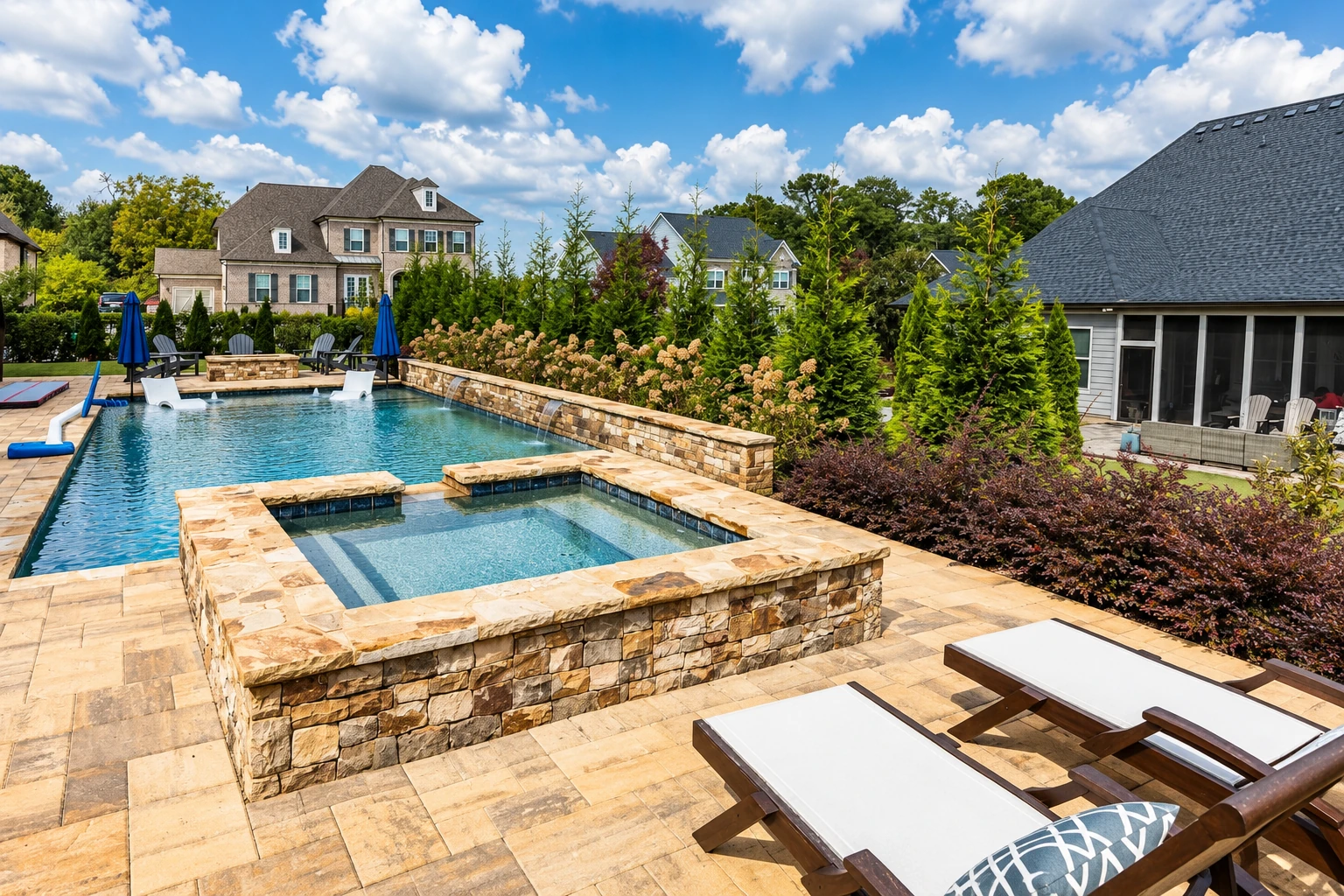
Leveling a sloped yard for a pool usually starts with a wall, and the flat ground behind it is where the deck goes, so planning both together keeps water moving away from each.
Concrete floor installation
If the level ground your new wall opens up becomes a shop, a shed or a finished room, it needs a floor poured on well-prepared ground so it stays flat and dry.
San Bernardino, CA
Book a site visit for your wall
Have the wall's rough height and length, how a truck reaches the spot, and any slopes or wet spots in mind, so the first visit gets straight to answers.