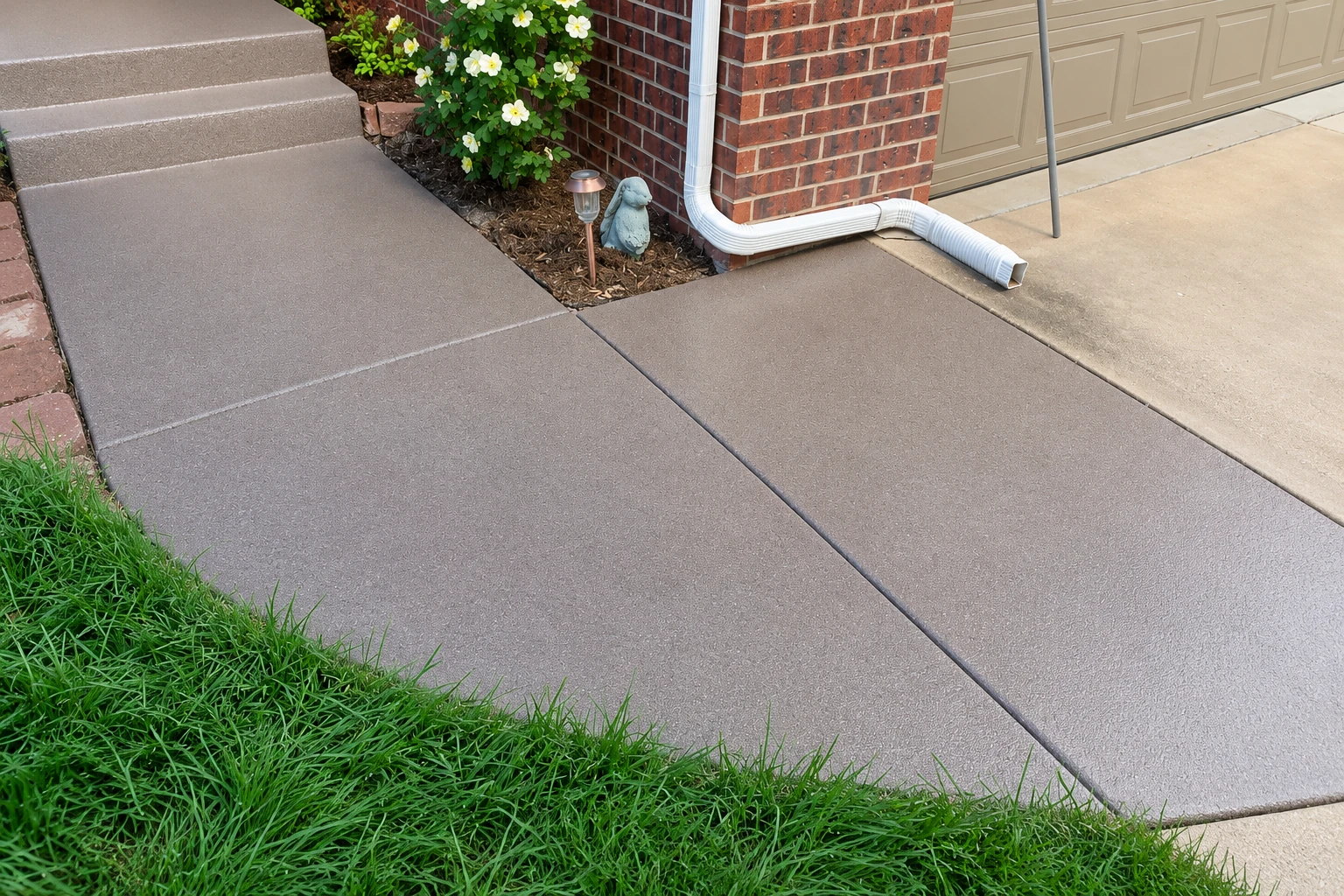
Foundation installation in San Bernardino CA - a slab with every drain in place
Planning a new house or addition and not sure what comes before the concrete? We plan the ground, drains and water first, then pour.
- Licensed and insured.
- Free quotes on site.
- Expect a reply within 1 business day.
What goes into a new foundation in San Bernardino?
Foundation installation in San Bernardino means preparing the ground and pouring the concrete a new house, addition or building sits on. Usually that's a slab-on-grade, a slab poured right on the ground with no basement or crawl space under it. Most of the time on a new foundation goes into planning and city review, not the pour itself.
Most people who call me have a lot, a set of plans or at least a sketch, and plenty of questions about what comes first. The price moves with the size and shape of the building, how much digging and grading the lot needs, what the plans and any soils report call for under the slab, and how many drain lines have to go in. The schedule mostly turns on plans, city review and inspections. If you have an existing foundation that's sinking, that's a different job, and our foundation raising page covers it. When I come out, I put in writing what's included and what isn't, so you can see what your number covers.
How we handle foundation installation, start to finish
I start by walking the lot with your plans and any soils report, because the ground and the paperwork tell us how deep to dig and what goes under the slab. Then we lay out the building, dig out, grade and pack the subgrade, the soil the slab sits on, so it doesn't settle with loose dirt later. Every drain line has to be in the right spot before the pour, so we go over the plumbing layout with you and your plumber first, since fixing or adding a drain through finished concrete is hard and expensive. We also look at how roof and yard water will move away from the slab. General slab guidance handles that with grading first, then gutters and downspouts that carry water off, and wider eaves help where you can get them. After that we set the rebar, steel bars that tie the concrete together and keep cracks from spreading, then pour and finish. We keep the slab curing, which means holding moisture in while it gains strength, before anyone builds on it.
A foundation rarely stands alone. Most start with concrete footings, the deeper bands of concrete under walls and heavy points that spread the building's weight into firm ground, and we pour those as part of the same plan. If the new building is a shop or business that needs paving beside it, we can take on the concrete parking lot building too and grade both so water runs away from the slab, not toward it.
Thickened-edge slab in one pour
On a level lot with good soil, the deeper edge and the slab often go in together, which saves a step and suits garages, additions and simpler houses. Your plans and soils report decide whether your building can be done this way.
Footings first, slab second
On slopes, softer ground or heavier buildings, we usually pour the footings first, get them inspected, then pour the slab inside them. It takes longer, but the foundation follows the ground the plans were drawn for.
Foundation installation in San Bernardino: the ground and the rules
Plan on a permit, because the city's Building and Safety Division issues building permits for all structural work apart from a few minor exceptions, and its exempt list names sheds, not foundations. If the lot needs grading, the city's grading policy also calls for a grading permit from the Director of Public Works/City Engineer before any dirt moves, unless the work falls under its listed exceptions. Some lots here sit in state earthquake hazard zones for fault rupture, quake-triggered landslides or liquefaction, which is when wet soil briefly acts like quicksand during a quake. Those zones bring geologic and engineering studies before construction starts, and inside the designated fault areas the city's grading policy asks for reports on liquefaction or other quake hazards. We take care of the permits and set up the inspections. Each city and the county run things a little differently, so we check with the right office for your address before we plan anything.
We're based in San Bernardino and work across the cities around it. The lots we see range from flat pads on the valley floor to slopes toward the foothills, where the grading and drainage plan matters as much as the concrete. We meet the same kind of hillside lots on jobs in Highland and Redlands, and we plan them the same way. We read the soils and the plans, set the water path, then pour.
Why San Bernardino property owners call us for foundation installation
I'm on site for the pour
I come out to look at every job myself, and our own crew does the work, with me there for the pour and the steps that matter most. On a foundation, that means the person who studied your lot and plans is watching the drains, the steel and the concrete go in.
In business here since 2020
We've been working under our own name for six years, and before that I spent years as the right hand to another concrete contractor here, walking jobs and running the crew. That time showed me what goes wrong when the planning gets rushed.
Licensed and insured for permit work
We're licensed and insured, and that matters here because the city only issues permits to contractors who hold the right state license for the work and a current City business license. Contractors with employees also show proof of workers' comp when the permit is issued, so it's a fair thing to ask anyone you're comparing.
On a foundation, the ground, the water and the plan matter more than anything you see on day one, and if part of your job needs an engineer, I'll tell you straight. Tell me about your lot through our contact page or call (840) 222-9185, and I'll come take a look.
Request a quoteGet a free written estimate for your new foundation
Send the form and we'll get back to you within one business day to set a time for me to come out. The estimate is free, done on site and written up, and it comes with no obligation.
What happens after you call about a new foundation?
Call or send the form
Tell us the address and what you're planning to build, and we'll get back to you to set a time for me to come out. We take calls any day from 7 AM to 10 PM.
I walk the lot with you
I look at the ground, the slope and where water goes, and I ask how you'll use the building. You get a written estimate that spells out what's included and what isn't, so you know what the number covers.
We handle permits and inspections
If the job needs a permit, we take care of it and set up the inspections with the right office. More involved projects go through city plan review first, so we build that time into the schedule.
Pour, then a final walkthrough
Our crew does the work with me there for the pour and the steps that matter most. When it's done, I go over the finished foundation with you before your builder takes over.
Frequently asked questions
How much does foundation installation cost in San Bernardino?
It depends mostly on the building's size and shape, how much digging and grading the lot needs, and what the plans and soils report call for under and around the slab. Deeper footings, extra steel, a drain tile or a lot that needs a grading permit all add to the cost, while a simple slab on flat, firm ground keeps it down. If you're trimming the budget, trim the finish work, not the base, because nobody sees the base on day one but it decides whether the slab holds up.
Will my foundation project in San Bernardino need plans from an architect or engineer?
Some projects do. More complex projects submit plans and specifications that the city reviews for code compliance before it issues a building permit, and in certain cases a California Registered Architect or Engineer has to prepare them. If yours is one of those, allow time for design and review before work starts, and I'll tell you at the estimate if I think your job needs an engineer.
What has to happen before a slab foundation is poured?
The permit has to be issued, the drains have to be set as we covered above, and the ground under the slab has to be ready. General slab guidance calls for a properly installed vapor retarder, a sheet that slows moisture coming up from the ground, over a gravel layer called a capillary break that keeps water from wicking into the concrete, plus a drain tile if the soil calls for one. The city checks the work through its permit and inspection process.
Will I need a soils report for a new foundation?
Most likely, yes. San Bernardino County Building and Safety says a geotechnical report, a soils engineer's study of the ground, is typically required for most structures, including main houses and additions, to make sure the ground is suitable and safe to build on. Since the city and the county each run things their own way, we check with the office for your address, and if you already have a report, it's one of the first things I'll read.
What causes cracks in a new concrete foundation slab?
Most cracks come from a base that was raked flat instead of dug out and packed, water running under the slab, a pour in the midday heat, or control joints that were cut late or skipped. Control joints are grooves that give the concrete a straight place to crack, so we cut them on time, pack the base, plan the water path and keep the slab curing. That keeps cracking down, though concrete can still show fine hairline cracks as it dries.
How long does it take to put in a new foundation?
Most of the time goes into getting ready, not pouring. Plans, city review, any soils study and inspections set the pace, and the pour itself is one of the shorter steps, followed by a curing wait so the concrete gains strength before framing starts. Once I've seen your lot and plans, I can tell you what your schedule turns on.
Related concrete work
Concrete footings
If you're adding a garage, a room or a block wall, footings sized to the plans carry its weight down to firm ground instead of loose fill.
Concrete parking lot building
A shop, church or small business usually needs paving that handles cars and trucks every day, sloped so rain runs to the drains instead of pooling by the doors.
San Bernardino, CA
Start planning your new foundation today
Call (840) 222-9185 or send the form with your address, what you're building and any plans or soils report you already have, so I can look at the right things on the first visit.